How Many Hours Should Nursing Students Study?
Part of the nursing study guides library. Not sure this is your weak area? Take the free study check first.
Stop tracking how many hours you sit at a desk with an open textbook, because clock time does not measure clinical comprehension. A student who spends four hours passively re-reading slides often retains far less than a student who completes thirty minutes of targeted active recall.
If you want to reduce academic fatigue and improve exam performance, measure learning outputs instead of logged hours. Nursing exams do not test how long you sat in a chair. They test whether you can recognize clinical deterioration, prioritize interventions, and apply safety principles under pressure.
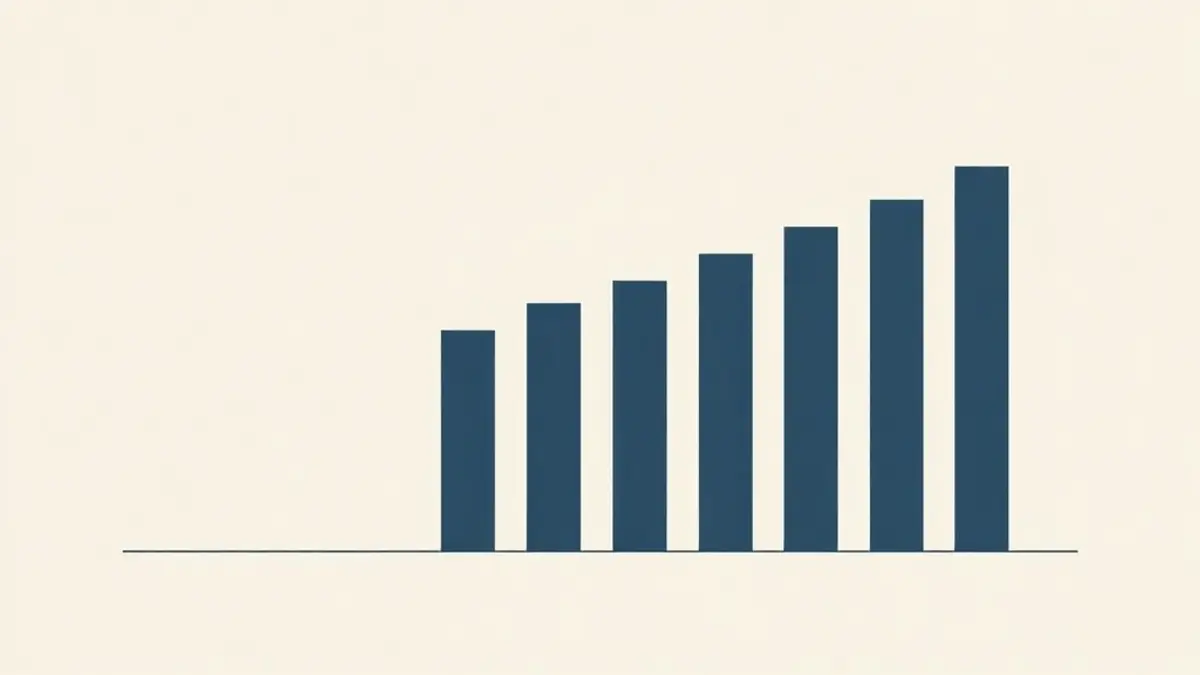
The real issue is not how many hours should nursing students study, but how many active retrieval cycles you complete before taking your test. Shifting your focus from clock management to output tracking transforms how efficiently you prepare for every nursing course.
Nursing students should measure study volume by completed retrieval outputs rather than daily clock hours. Aim for active practice targets—such as completing and rationalizing twenty practice questions or performing three closed-book concept maps—instead of sitting for a set number of hours. Focus on output quality over clock time.
Why counting study hours fails in nursing school
In prerequisite courses, memorization often yields acceptable grades. Reading a chapter three times might be enough to recall terms on a multiple-choice matching test. Nursing school assessments require application, analysis, and clinical evaluation, which passive reading cannot build.
When you set a target like studying four hours a day, your brain treats sitting in the chair as the objective. You end up highlighting paragraphs, re-writing neat notes, or staring at slides while mentally exhausted.
This creates a false sense of security. You feel productive because you spent half your day at a desk, but you have not tested your ability to pull information from memory or make a clinical decision under exam conditions.
What should I measure instead of time?
To evaluate your daily preparation accurately, replace hours with countable outputs. An output is a discrete, verifiable exercise that forces your brain to recall information without looking at your notes.
Start measuring your daily progress using specific, output-focused metrics:
- Practice questions completed and rationalized.
- Pathophysiology mechanisms explained aloud or drawn from memory.
- Drug classes broken down by primary action, monitoring priorities, and adverse effects.
When building a structured how to build a nursing study plan you will actually follow, assign specific output quotas for each day. For example, resolve to complete fifteen prioritization questions and draw two fluid-and-electrolyte mechanism pathways from memory rather than scheduling two vague hours of pharmacology review.
If you are uncertain whether your current study output is addressing your specific academic weak areas, take the free Nursing Study Check to evaluate your preparation habits before your next exam.
How long should I study for nursing exams based on your runway?
Knowing when should I start studying for nursing exam preparations depends on the volume of active outputs you need to complete rather than arbitrary daily hour targets. Adjust your daily output goals based on how far away your test date is.
The 3-week runway
With three weeks remaining before an exam, schedule low-density, high-retention outputs. Focus on foundational pathophysiology and core pharmacologic mechanisms. Complete ten to fifteen practice items daily and construct one closed-book concept map per session.
The 1-week runway
When you are one week out, shift your focus to integrated clinical application and decision-making. Increase your daily practice question volume and review rationales for every option, including the distractors. Cross-reference official frameworks like the NCLEX test plans to confirm you are covering high-frequency client need categories.
The 48-hour emergency runway
If you only have two days before an assessment, stop reading textbooks completely. Focus exclusively on active recall and practice questions. Answer a set of items, immediately analyze why the correct option is right and why the incorrect options are wrong, and review priority frameworks like airway, breathing, and circulation.
Building a nursing study plan for working students
If you balance nursing school with a job or family commitments, sitting down for a solid four-hour block is rarely realistic. Trying to force long study sessions after a full shift leads to exhaustion and poor retention.
A realistic nursing study plan for working students breaks study requirements into micro-outputs spread throughout the day. Instead of worrying about how many hours a day should nursing students study, calculate how many small retrieval tasks you can fit into your existing routine.
Use ten-minute pockets of downtime to work through three or four practice questions or outline the key monitoring priorities for a single medication class. Save longer synthesis tasks, such as complete rationale analysis or full system concept maps, for designated off days. Reviewing strategies for time management for nursing students helps you protect these short windows without overwhelming your schedule.
Comparing study output categories for clinical preparation
| Study Method Category | Output Strategy | Key Distinguishing Feature | Student Practice Goal | Primary Nursing Focus | Exam Application Clue |
|---|---|---|---|---|---|
| Pathophysiology | Closed-book mechanism maps | Tracing etiology to clinical manifestations without reference material | Map disease progression from trigger to organ response | Understand compensatory mechanisms | Question stems asking which physiological change explains a finding |
| Pharmacology | Drug class matrix sheets | Grouping agents by therapeutic mechanism rather than individual names | Explain mechanism, priority baseline assessment, and side effects | Identify life-threatening reactions and safety checks | Stems asking which assessment finding requires holding a dose |
| Diagnostic Interpretation | Lab and diagnostic rationale drills | Explaining the physiological cause of an abnormal value | Connect lab alterations back to organ system impairment | Differentiate expected vs urgent diagnostic changes | Questions presenting diagnostic panels and asking for immediate action |
| Priority Interventions | ABC and Maslow decision trees | Sorting interventions by urgency rather than chronological order | Select the single safest initial action from valid choices | Apply airway, breathing, circulation, and safety rules | Stems using phrases like first, initial, or most immediate |
| Delegation & Safety | Scope of practice assignment grids | Matching client stability with appropriate staff capabilities | Categorize tasks appropriate for RN, LPN, or UAP roles | Ensure client safety and legal scope compliance | Questions asking which task the nurse should assign to assistive personnel |
How to analyze a clinical decision question
When practicing with board-style questions, success depends on analyzing why options are correct or incorrect rather than simply choosing an answer. Consider this synthetic clinical example.
A nurse evaluates a client admitted with acute respiratory distress secondary to a heart failure exacerbation. Which intervention should the nurse perform first?
- A) Administer a prescribed IV loop diuretic.
- B) Place the client in a high-Fowler’s position.
- C) Review the client’s most recent serum electrolyte laboratory report.
- D) Request a prescription for a STAT chest X-ray.
Step-by-step decision analysis
Option B is correct. Placing the client in a high-Fowler’s position immediately reduces venous return (preload) and allows maximum thoracic expansion, improving gas exchange without delay. This is an independent, non-invasive nursing action that addresses Airway and Breathing directly.
Option A is a tempting wrong choice. Administering an IV diuretic is appropriate and necessary for fluid overload, but positioning can be executed within seconds before obtaining and preparing the medication. Physical positioning takes priority over medication administration in an acute airway or breathing crisis.
Option C is incorrect as an initial action. Checking laboratory values is important prior to diuretic administration to monitor baseline electrolyte balance, but assessing and positioning the client to relieve acute distress comes first. Always check your specific course textbook or institutional standards for local baseline reference expectations, or review general diagnostic resources through MedlinePlus medical tests.
Option D is incorrect. A chest X-ray provides diagnostic data, but delaying physical positioning to request imaging increases immediate distress and risk to client safety.
Transitioning your routine to an output-based workflow
Making the shift from tracking hours to tracking outputs requires a change in daily habits. Stop opening a book and setting a timer for two hours. Instead, start each study period with a written task list detailing exactly what outputs you will produce.
If you are unsure how to structure your daily schedule, consult our guide on how to study for nursing school for additional active recall techniques. Track your outputs in a notebook or spreadsheet, logging how many questions you reviewed and how many concepts you explained without notes.
If you want the whole plan built around this output framework, check out the Nursing Study OS for $19 as a one-time purchase with no subscription. It gives you ready-to-use output tracking templates, daily planning frameworks, and active recall logs tailored for nursing coursework.
Key takeaways
- Measure study volume by completed active outputs, such as practice questions and concept maps, rather than logged clock hours.
- Adjust your practice targets based on your exam runway, increasing question volume as test dates approach.
- Break study targets into short micro-sessions throughout the day if you balance school with work or family responsibilities.
- Analyze rationales for both correct and incorrect options on every practice item to build clinical decision-making skills.
- Use recognized priority frameworks like airway, breathing, and circulation to determine the initial nursing action in scenario questions.
Know what you're weak at?
We will build the entire study system around it — your roadmap, your countdown, your questions and your final review. Nursing Study OS™, $19 once.
Build My Nursing Study OS — $19